
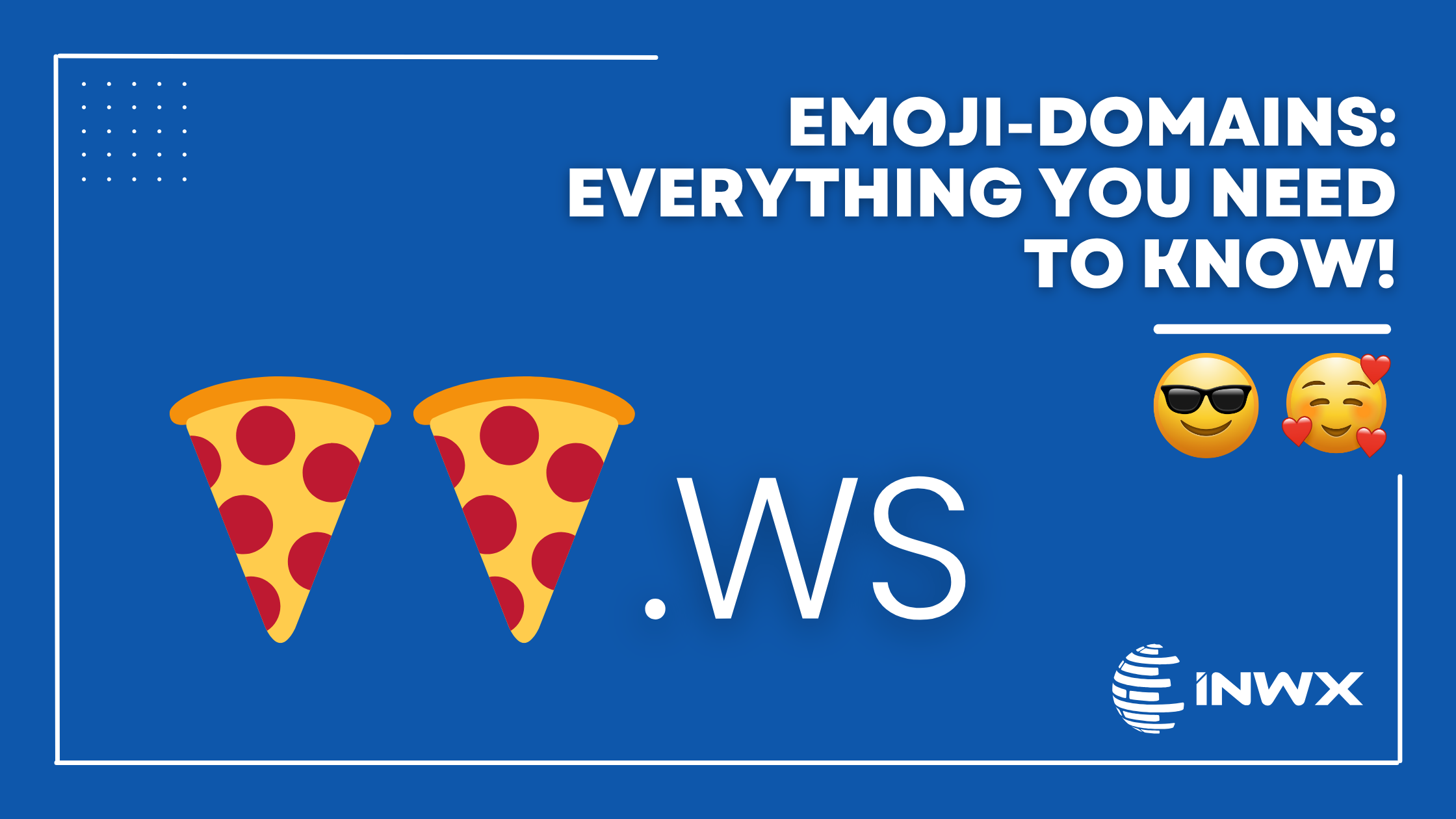
Emojis have become an integral part of digital communication, whether in chats, on social media, or in marketing campaigns. What began as a small digital gimmick has evolved into a universal visual language. And today, emojis are even making their way into domain names.
What may seem like a playful innovation at first actually holds great potential. Brands can use emoji domains to visually stand out from competitors. And private users can express themselves in a unique and creative way.
The History Behind Emoji Domains
The story of emojis begins with a digital proto-smiley. In 1982, computer science professor Scott Fahlman used “:-)” as the first known emoticon. In the 1990s, more elaborate ASCII-based symbols followed. Then, in 1999, Japanese designer Shigetaka Kurita created the first graphical emojis.
In 2003 the ICANN (Internet Corporation for Assigned Names and Numbers) laid the technical foundation for emoji domains. They introduced the IDNA system (Internationalizing Domain Names in Applications), enabling the use of non-ASCII characters in web addresses.
But Emojis gained widespread attention in 2011 with their integration into the iPhone. That same year, Cabel Sasser registered the first known emoji domain: 💩.la. In 2015, brands like Coca-Cola and Norwegian Airlines used emoji domains in marketing campaigns for the first time.

How Do Emoji Domains Work?
To convert domains into IP addresses, the Domain Name System (DNS) uses characters from the ASCII set. This set includes only English letters (A–Z), numbers (0–9), and a few special characters such as hyphens.
Emojis, accented characters, or non-Latin scripts fall outside the ASCII standard. To use them in domain names, ICANN introduced the IDNA system. This enables the creation of Internationalized Domain Names (IDNs) – domains based on the Unicode standard.
Unicode contains over 120,000 characters from a wide variety of writing systems and symbol sets, including emojis. To make these compatible with the DNS, they must be converted into an ASCII-readable format. To achieve this, a system called Punycode encodes complex characters into ASCII strings. For example, the emoji 😉 becomes the Punycode version xn--n28h.
Behind every emoji domain is a unique ASCII-coded version that the DNS can process. This conversion happens automatically in the browser.
Domains with Emojis: The Benefits at a Glance
Emoji domains are more than just a fun gimmick. They offer creative and eye-catching ways to stand out online. For brands, companies, or personal projects, using emojis in domain names can be a unique differentiator. Emojis in web addresses instantly grab attention, convey emotion, and are easy to remember.
One major advantage is branding. Emojis strengthen visual identity and increase brand recognition.
They also open up space for creative storytelling. Companies can choose emojis that directly relate to their industry or offering. For example, a 🍩 for a bakery or 🐾 for a veterinary clinic are simple and intuitive.
Another advantage: emojis are internationally understandable and convey meaning across cultures. That makes them ideal for global communication.
Domains with emojis stand out in search results, social media feeds, or advertising materials. That can increase visibility and improve click-through rates.
Risks and Technical Challenges of Emoji Domains
As appealing and creative as emoji domains may be, they still come with some technical limitations in practice.
A major issue is inconsistent support. Not all browsers display emojis in the address bar. While Safari shows the actual emoji, browsers like Chrome and Firefox automatically convert them into their Punycode form. As a result, the Emoji Domain loses its visual impact.
Other services, like email providers, also do not support emojis in email addresses. Emoji domains only work when entered as Punycode. Emojis cannot be used in the actual email address field.
Usability challenges also exist, especially for less tech-savvy users. Many people don’t know how to input emojis in the address bar. Especially on desktop computers without built-in emoji keyboards it can be inconvenient. Copying and sharing such URLs can also feel less intuitive.
Additionally, there are thousands of emojis. Many of them look similar, or people interpret them differently. This can lead to typos, confusion, or miscommunication.

Another limitation is the limited number of supported top-level domains (TLDs). Only a few country-code TLDs like .WS, .TK, .FM or .TO currently allow emoji domains. Even these may change their policies, as seen when .LA stopped supporting emoji registrations.
Generic domain endings like .COM or .ORG do not allow emoji domains at all, as they follow ICANN regulations. ICANN considers emojis a potential security risk. Many emojis look similar and could potentially be misused for phishing or fraud.
Conclusion: Are Emoji Domains Worth It?
Emoji domains are bold, creative, and emotionally engaging. They offer exciting opportunities in marketing to stand out visually.
At the same time, they have technical challenges. These include inconsistent support from browsers and email, limited TLD options, and possible security issues.

If you’re considering using an emoji domain, it’s best to see it as a supplement to your main domain, not a replacement. Used strategically, they can add a modern, eye-catching touch to your online presence.
Whether it’s for your next project, a creative campaign, or just for fun, at INWX you can now register emoji domains quickly and easily. Just enter your chosen emoji (or the corresponding Punycode) directly into the domain check. If it’s free, you can register your domain with an emoji right away.
Try our domain check and find your perfect emoji domain today!
